YouTube Music Introduces AI-Generated Music Labels: What Creators Need to Know
Published: October 28, 2026 | Category: Creator News
YouTube is making another significant change to how audiences identify content created with artificial intelligence.
On October 14, 2026, the company announced that YouTube Music had begun rolling out visible labels for tracks created primarily using generative AI. The company also confirmed plans to extend these labels to the main YouTube application.
The announcement matters to musicians, independent artists, AI music creators, and video producers who use generative audio tools.
As AI music becomes more accessible, questions about authenticity, disclosure, licensing, and creative ownership are becoming increasingly important.
Here is what YouTube actually announced, how its existing disclosure system works, and what creators should do next.
1. What Did YouTube Announce?
In an official announcement published on October 14, 2026, YouTube confirmed that YouTube Music was introducing labels to help listeners identify tracks produced primarily through generative AI.
The company specifically referenced music where generative models create elements such as the composition and vocals.
The labels are intended to provide listeners with clearer information about how the music was made.
This is a transparency feature, not an announcement that AI-generated music is being banned.
YouTube also stated that the labels would expand beyond YouTube Music to the main YouTube app.
However, the announcement did not establish a precise worldwide completion date for that expansion.
Official source: YouTube Music Adds New Labels for AI Music — October 14, 2026
2. What Will the AI Music Labels Look Like?
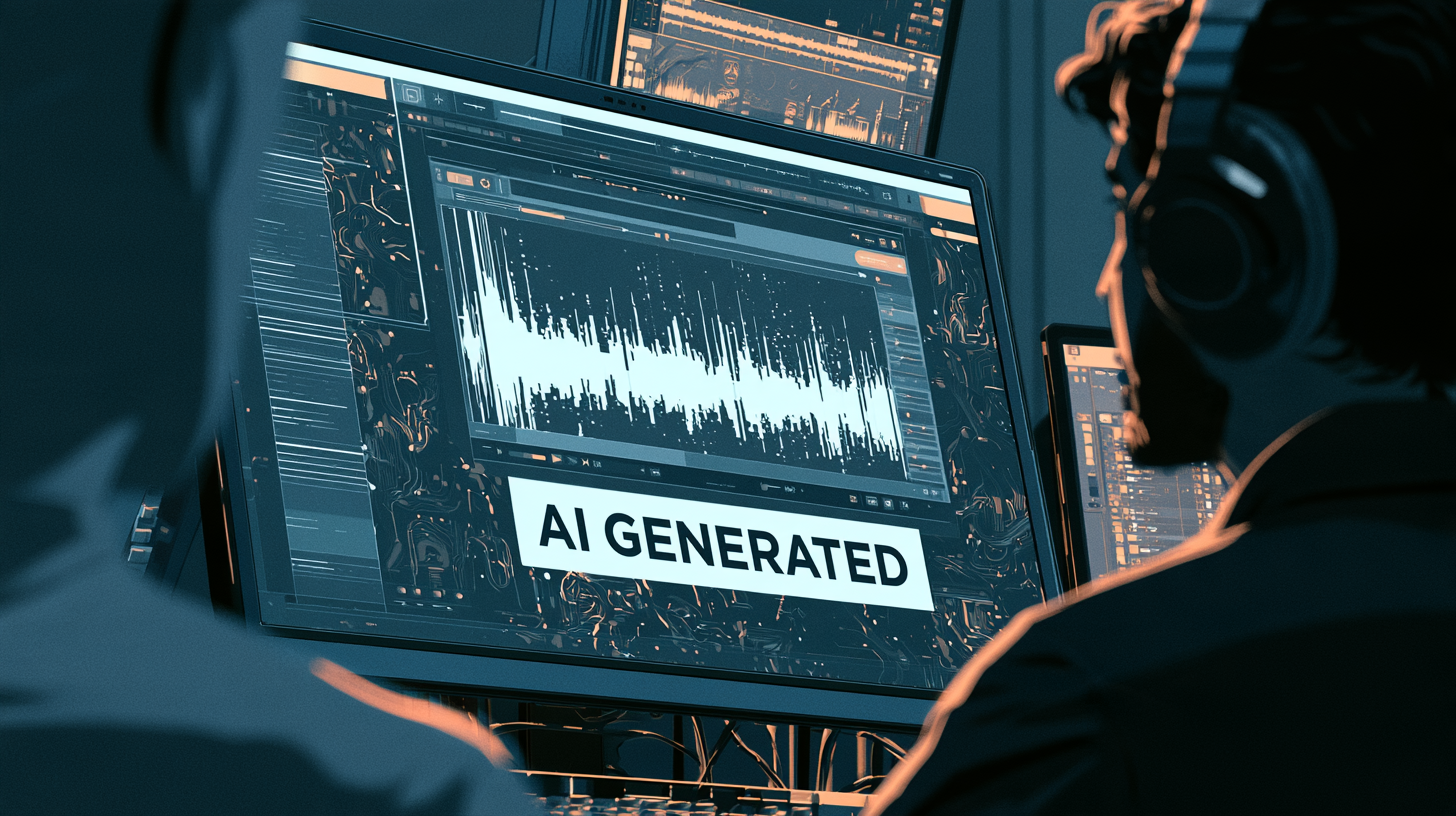
According to YouTube, listeners will see a label directly on the player page when a track has been identified as involving significant generative AI creation.
The label is designed to be visible during the listening experience rather than being hidden exclusively in a description.
Users can select the label to open a menu containing additional information.
This approach is intended to make the origin of AI-generated music easier to understand.
Why placement matters
Previously, viewers often needed to examine descriptions or other disclosures to understand whether AI played a significant role in producing a piece of content.
A label placed on the player creates a more immediate disclosure.
For creators, this means information about AI involvement may become more visible to listeners than it was through description text alone.
The exact presentation may vary as the feature expands across applications and devices.
3. How Does YouTube Identify AI-Generated Music?
YouTube's announcement describes a combination of cooperation with music partners and internal detection systems.
Its broader AI disclosure documentation also identifies several ways content can receive AI labels.
These include:
- Creators voluntarily disclosing qualifying AI content
- YouTube identifying content through internal detection systems
- Certain content containing relevant C2PA provenance metadata
- Content generated through YouTube's own AI tools
C2PA refers to a technical standard for recording information about the origin and history of digital media.
It can provide provenance information, but the presence or absence of such metadata is not, by itself, a universal test of whether something was made using AI.
Can detection make mistakes?
Automated identification systems are not necessarily perfect.
YouTube's disclosure guidance explains that creators can correct some automatically applied labels through YouTube Studio.
However, certain labels cannot be changed through the ordinary creator controls, including labels associated with YouTube's own AI tools, qualifying C2PA metadata, or manual review.
Creators should inspect the relevant notification and use YouTube's documented process rather than assuming every label can be removed.
4. What Counts as AI-Generated Music?
The October announcement focuses on tracks created primarily with generative AI.
YouTube's existing disclosure guidance also identifies AI-generated music as an example of content requiring disclosure.
However, creators should distinguish between several production methods.
| Production method | General description | |---|---| | Fully AI-generated song | A model generates most or all of the composition and potentially vocals | | AI-generated vocals | Synthetic singing is used in a musical production | | AI-assisted composition | A human musician uses AI to help develop musical material | | Traditional digital production | A musician records and edits music using ordinary digital tools | | AI audio repair | Software improves existing audio without fundamentally generating a new performance |
These categories help explain production differences; they are not official classifications or guaranteed outcomes under YouTube's labeling systems.
The October announcement does not provide a complete public technical threshold defining precisely how much AI involvement causes every track to receive the new music-player label.
That distinction is important.
Using software that contains AI functionality does not automatically mean every resulting recording is primarily AI-generated music.
Creators should evaluate the actual production process and follow YouTube's current disclosure instructions.
5. What Does This Mean for AI Music Creators?
Creators using AI music generators should treat the announcement as a reason to review their publishing workflow.
The most important consideration is transparency.
If a song is generated primarily using AI, creators should not assume that omitting a disclosure from the description will prevent listeners from learning about its origin.
YouTube may apply labels through its own systems.
Practical actions for music creators
Document your production process. Keep a record of the software used, generation dates, prompts, original recordings, and human contributions.
Check commercial licensing. Confirm that your chosen AI music service permits your intended commercial use under the terms applicable to your account and generation date.
Disclose qualifying AI use. Follow the current YouTube Studio requirements rather than relying on assumptions.
Avoid unauthorized impersonation. Do not use synthetic vocals to misleadingly represent a real performer or suggest endorsement without permission.
Keep original project files. Preserve stems, recordings, and relevant project information when available.
These practices can help creators manage future questions about attribution, licensing, and how a track was produced.
6. What About YouTubers Who Use AI Background Music?
This is particularly relevant to documentary creators, motivational channels, gaming channels, and independent filmmakers.
Many creators use AI tools to generate background scores, atmospheric soundtracks, and instrumental music.
The October 14 announcement concerns labels for music tracks, while YouTube's broader AI disclosure policy applies to qualifying AI-generated or meaningfully altered content.
These are related systems, but they should not be treated as identical.
Example: AI-generated instrumental soundtrack
Imagine a creator generates a three-minute orchestral instrumental using an AI music platform and uploads it as a standalone music video.
That is a straightforward example of AI-generated music that should be assessed under YouTube's music disclosure requirements.
Example: AI background music in a documentary
Now imagine a 15-minute documentary that uses an AI-generated instrumental underneath human narration.
The exact disclosure treatment may depend on the nature of the uploaded content and YouTube's applicable guidance.
Creators should not automatically assume that the new YouTube Music player label will appear on every documentary containing AI-assisted background music.
YouTube's October announcement did not establish such a universal rule.
When in doubt, consult the current disclosure guidance and provide accurate information about the content.
7. How to Disclose AI Content in YouTube Studio
YouTube's current Help Center explains that creators can disclose qualifying generative AI content during the upload process.
The general procedure is:
- Open YouTube Studio.
- Begin uploading the video.
- Locate the Attributes section.
- Find the AI use disclosure setting.
- Select the appropriate answer based on the content.
- Complete the remaining upload details.
For qualifying content, YouTube may display a label informing viewers that AI was used.
The precise interface can change as YouTube updates Studio.
YouTube also maintains additional guidance for music artists and music-related disclosures.
Official instructions: YouTube Help — Disclosing Use of Generative AI Content
8. Will AI Labels Affect YouTube Monetization?
One of the biggest concerns among creators is whether an AI label automatically prevents monetization.
According to YouTube's official disclosure guidance, disclosing AI-generated content does not, by itself, limit a video's audience or its eligibility to earn money.
That is an important distinction.
However, it does not mean that every AI-generated song or video qualifies for monetization.
YouTube's monetization policies still apply.
These include requirements concerning originality, authenticity, reused material, and inauthentic or mass-produced content.
Copyright and licensing rules also remain relevant.
What creators should understand
An AI disclosure label is not automatically a monetization penalty.
But a label does not provide a copyright license, guarantee advertising eligibility, or exempt content from YouTube's other policies.
A creator should evaluate these issues separately.
Official policy: YouTube Channel Monetization Policies
9. Does an AI Music Label Mean a Song Is Copyright-Free?
No.
This is an important misconception to avoid.
A label indicating that AI was used in creating music does not establish that the track is free to reuse.
Nor does it automatically establish who owns every element of the recording.
Rights can depend on several factors, including the jurisdiction, the extent of human authorship, contractual terms, and whether protected material was incorporated.
A creator who discovers an AI-labeled song on YouTube should not assume they can download it and use it commercially.
Likewise, generating music through an AI service does not automatically mean every possible use is authorized.
Review the provider's applicable license and the relevant rights before publishing.
10. Why YouTube Is Increasing AI Transparency
YouTube's announcement frames the change around helping listeners understand the origins of the music they hear.
This is part of a broader effort to distinguish synthetic or meaningfully altered content from recordings and events that audiences might otherwise interpret as authentic.
Earlier in 2026, YouTube announced updates to its AI disclosure systems, including additional automated labeling and creator controls.
The new YouTube Music labels extend that transparency approach into the music-listening experience.
The underlying issue is not simply whether AI was used.
It is whether audiences have enough information to understand the nature of the content.
For music listeners, that could mean knowing that a performance was primarily generated rather than recorded by a human singer.
For creators, it means communicating production methods accurately without treating every ordinary editing operation as equivalent to generating a synthetic performance.
11. What Has Not Been Confirmed?
Because this is a developing platform rollout, several details should not be presented as settled facts.
As of October 28, 2026, the official October 14 announcement does not establish:
- A precise worldwide completion date for labels in the main YouTube app
- A publicly specified percentage threshold of AI involvement that determines every labeling decision
- That every video containing AI background music will display the same YouTube Music player label
- That receiving an AI music label automatically removes monetization eligibility
- That all AI-generated music is copyright-free
- That every AI detection result is infallible
These distinctions matter because exaggerated headlines can easily mislead creators.
YouTube has confirmed the new music-label rollout, but that does not justify inventing additional restrictions or consequences.
12. What Should Creators Do Now?
Creators do not need to stop using AI music tools simply because YouTube is introducing clearer labels.
Instead, they should improve documentation and publishing practices.
A practical checklist
| Action | Why it matters | |---|---| | Review AI music disclosures | Helps meet platform requirements | | Verify commercial usage rights | Reduces licensing uncertainty | | Keep generation and project records | Documents how content was produced | | Check YouTube Studio notifications | Identifies applied disclosures | | Avoid unauthorized voice imitation | Reduces impersonation and rights risks | | Monitor official policy updates | Helps track changing requirements |
For creators publishing music regularly, this review should become part of the standard release process.
For creators using occasional AI background scores, the priority is to understand which rules apply to their specific content rather than assuming every AI-assisted production is treated identically.
13. What Happens Next?
YouTube has confirmed that the new AI music labels will expand to the main YouTube application.
The company has not provided a complete rollout timetable in the October 14 announcement.
Creators should monitor YouTube's official blog and Help Center for further details about availability, disclosure requirements, and labeling controls.
The broader direction is clear: platforms are making information about generative media more visible to audiences.
How these systems evolve will depend on future technical developments, policy decisions, and creator feedback.
Final Thoughts
YouTube Music's October 2026 AI labeling announcement represents a meaningful development for creators who produce or distribute synthetic music.
The change does not amount to a ban on AI-generated songs, and YouTube has not announced that an AI label automatically disqualifies content from monetization.
Instead, the new feature is intended to give listeners clearer information about when generative AI played a major role in creating a track.
For creators, the practical response is straightforward: understand the disclosure rules, document your production process, verify licensing, and follow official updates as the rollout continues.
AI music is becoming another established part of digital production.
The question is no longer only what creators can generate, but how clearly they communicate what they have created.
Official Sources and Further Reading
- YouTube Official Blog — YouTube Music Adds New Labels for AI Music (October 14, 2026)
- YouTube Help — Disclosing Use of Generative AI Content
- YouTube Help — Understanding How This Content Was Made Disclosures
- YouTube Community — Updates to AI Content Disclosure and Labels (May 27, 2026)
- YouTube Help — YouTube Channel Monetization Policies
Reporting cutoff: October 28, 2026. Feature availability and platform requirements may change after publication.