YouTube Shorts Series Launches: How Seasons, Episodes, and Custom Thumbnails Could Change Short-Form Content
Creator News | October 28, 2026
YouTube is introducing a more structured way to publish and watch episodic short-form videos.
At Made on YouTube on September 23, 2026, the company announced Shorts Series, a feature that allows creators to organize Shorts into seasons and episodes.
The announcement also highlighted custom thumbnails and sequential playback, making it easier for viewers to discover a series and continue watching its installments.
For creators producing short documentaries, fictional stories, educational lessons, comedy sketches, and serialized entertainment, the update offers a different way to think about short-form publishing.
Rather than treating every Short as a completely independent upload, creators can develop connected episodes within a recognizable series.
Here is what YouTube announced, why the change matters, and how creators can prepare content for episodic viewing.
1. What Are YouTube Shorts Series?
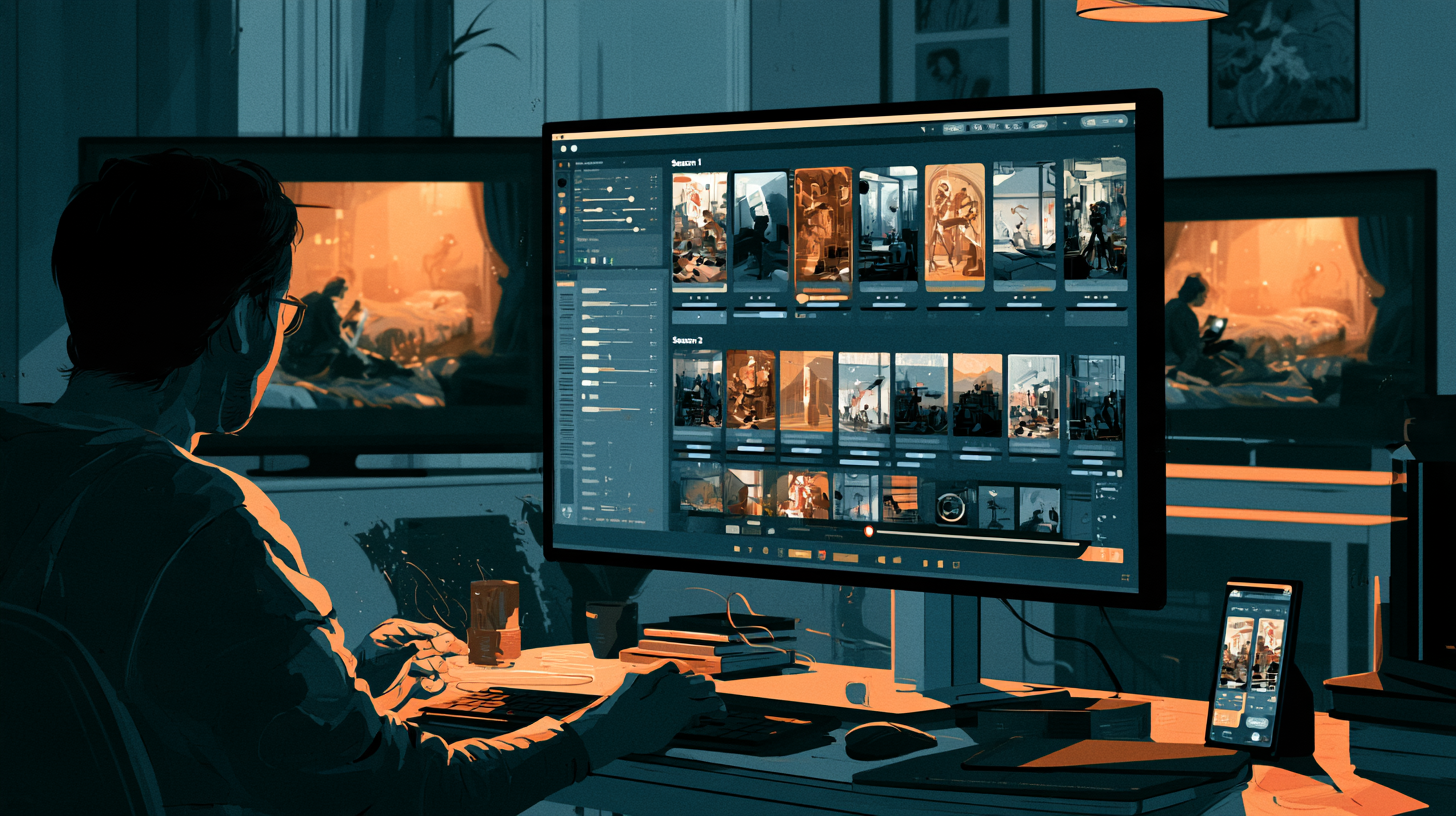
YouTube Shorts Series is a new way to organize short-form videos into seasons and episodes.
The feature was announced on September 23, 2026, as part of YouTube's wider television and creator product updates.
According to YouTube, Shorts Series began rolling out to creators across web, mobile, and television on the announcement date.
The company also introduced support for custom thumbnails and sequential playback as part of the experience.
These features are designed to make connected short-form content easier to discover and watch.
Official announcement: Connect With Creators on the Biggest Screen With YouTube's Latest Features
2. Why Is YouTube Introducing Episodic Shorts?
Short-form videos are often consumed individually.
A viewer encounters a video, watches it, and moves to another piece of content.
That model works well for standalone entertainment, quick explanations, and brief demonstrations.
However, it can create challenges for creators producing connected stories.
For example, a fictional series might contain ten episodes that need to be watched in a particular order.
If viewers discover Episode 7 before Episode 1, they may not understand the characters or storyline.
YouTube's new series structure is intended to make that viewing experience more coherent.
Seasons and episodes give creators a recognizable organizational framework.
Sequential playback can help viewers move through connected content more naturally.
3. How Seasons and Episodes Work
The central concept is straightforward.
A creator develops a recurring series and divides it into episodes.
Multiple episodes can be organized into seasons.
For example, a fictional historical mystery series could be structured as follows:
Season One: The Lost Expedition
| Episode | Working title | |---|---| | 1 | The Expedition Disappears | | 2 | The Last Recorded Message | | 3 | The Map Nobody Understood | | 4 | The Discovery Beneath the Ruins | | 5 | The Truth About the Expedition |
Season Two: The Forgotten Kingdom
A second season could introduce another connected storyline while retaining the series identity.
This example illustrates an editorial structure, not a requirement imposed by YouTube.
The official announcement confirms the seasons-and-episodes concept but does not establish a universal number of episodes required for each season.
Creators should check the available controls in their own account as the rollout progresses.
4. Sequential Playback Could Make Series Easier to Follow
One important part of the announcement is sequential playback.
For episodic content, viewing order matters.
A tutorial series may teach foundational skills before advanced techniques.
A fictional drama may introduce characters and conflicts before later developments.
A documentary series may gradually reveal evidence or historical context.
Sequential playback is intended to support that progression.
Example: Educational Shorts
Imagine a creator publishing five Shorts about AI filmmaking:
Episode 1: Writing the script
Episode 2: Planning the scenes
Episode 3: Generating images
Episode 4: Animating the images
Episode 5: Editing the final video
These topics are related and follow a logical sequence.
A series structure could make it easier for interested viewers to continue learning.
However, creators should still make individual episodes understandable.
Not every viewer will begin with the first installment.
5. Custom Thumbnails Give Creators More Presentation Control
YouTube also highlighted custom thumbnails as part of the Shorts Series experience.
This matters because thumbnails can communicate which series a video belongs to.
For example, a creator producing historical mystery episodes might use:
- Consistent typography
- A recognizable series emblem
- A recurring visual palette
- A prominent episode subject
- Clear differences between installments
The objective is to create recognizable continuity without making every thumbnail identical.
Additional Shorts thumbnail changes
In a separate July 24, 2026 announcement, YouTube said YouTube Partner Program creators could begin uploading custom thumbnails for Shorts, with plans to expand availability.
YouTube also introduced additional suggested thumbnail-frame options on desktop.
These announcements should be distinguished from the September Shorts Series rollout.
Feature access can depend on account eligibility and rollout status.
Related source: YouTube — Making Thumbnails Easier on YouTube
6. YouTube Reports Significant Growth in Microdramas
YouTube's September announcement included notable figures about microdramas.
According to the company, microdrama content generated more than 6.5 billion views during the first half of 2026.
YouTube also reported that watch time for microdramas increased by more than 50% year over year.
On television specifically, the company said microdrama views increased by more than 90% year over year.
These are YouTube-reported platform figures.
They demonstrate growing activity around this format, but they do not mean that every microdrama creator experienced similar growth.
Nor do they guarantee that publishing a serialized Short will produce more views than publishing standalone content.
What is a microdrama?
A microdrama is a short-form dramatic story, often delivered through multiple episodes.
It may use recurring characters, ongoing conflicts, and cliffhangers.
The format can include romance, mystery, comedy, fantasy, historical fiction, and other genres.
YouTube's Shorts Series feature provides a more structured presentation system for this kind of content.
7. Why Television Support Matters
Shorts are commonly associated with smartphone viewing.
But YouTube increasingly distributes content across televisions, computers, tablets, and mobile devices.
The company announced that Shorts Series would be available across web, mobile, and TV.
This is relevant because a creator's content may be encountered in different viewing environments.
A vertical video designed for a phone may also be watched on a large television screen.
Production considerations
Creators should evaluate:
Text readability: Captions and labels should remain understandable across supported displays.
Visual composition: Important subjects should remain clear within the vertical frame.
Audio intelligibility: Dialogue should be understandable without relying on smartphone headphones.
Episode continuity: Viewers should be able to recognize recurring characters and settings.
These are practical production considerations, not new technical requirements announced by YouTube.
8. Which Creators Could Benefit From Shorts Series?
The new structure is relevant to several content categories.
Educational creators
A software educator could create a series explaining one feature per episode.
Historical storytellers
A creator could publish connected Shorts covering a historical event, with each episode focusing on a different stage.
Fictional storytellers
Writers and filmmakers could develop recurring characters and ongoing narratives.
Fitness educators
A channel could organize short demonstrations around a specific training subject.
Technology reviewers
A creator could develop an episodic explanation of a product, covering setup, features, limitations, and conclusions.
However, not every subject needs a series.
A standalone video answering a simple question may work better independently.
Creators should choose the structure that best serves the content.
9. How to Plan Your First Shorts Series
A successful episodic project begins before the first upload.
Start by defining the central idea.
For example:
Series concept: The history of an ancient city.
Intended audience: Viewers interested in short historical explanations.
Format: Five connected episodes.
Editorial goal: Explain the city's rise, defining events, and decline.
Then outline the episodes.
| Episode | Central question | |---|---| | 1 | Why was the city founded? | | 2 | How did it become powerful? | | 3 | What made its culture distinctive? | | 4 | What caused its greatest crisis? | | 5 | What happened to the city afterward? |
Each episode should have a distinct purpose.
Avoid dividing one short explanation into several videos merely to increase the number of installments.
The series should offer meaningful progression.
10. Maintain Visual and Narrative Consistency
Episodic storytelling introduces continuity challenges.
Recurring characters, locations, terminology, and visual styles should remain recognizable.
For AI-assisted creators, this may require:
- Character reference sheets
- Consistent environment descriptions
- Reusable visual style guides
- Organized episode scripts
- Approved reference images
- A documented timeline of story events
For example, if a fictional character has a scar above the right eyebrow in Episode 1, that detail should not randomly move in Episode 4.
The same principle applies to educational series.
Terminology, software demonstrations, and instructions should remain consistent between episodes.
A simple series bible can help prevent these problems.
11. Should Every Episode End With a Cliffhanger?
Not necessarily.
Cliffhangers can work well in serialized fiction because they create anticipation about the next development.
However, an educational episode should not withhold essential information simply to force viewers to watch another video.
A better approach is to provide a complete answer to the episode's central question while introducing the next relevant topic.
Example
At the end of a tutorial about generating consistent AI images, the creator might say:
"Now that the character references are ready, the next episode shows how to animate those images without losing visual continuity."
The current episode delivers its promised information.
The next episode offers a logical continuation.
That is more useful than creating artificial suspense.
12. Does Shorts Series Guarantee More Views?
No.
YouTube's announcement describes organizational and playback features.
It does not promise that videos placed into a series will automatically receive more impressions, higher retention, or preferential recommendation treatment.
Creators should avoid assuming that the new feature changes YouTube's ranking systems in a specific way unless YouTube confirms such behavior.
A series may improve navigation and continuity for interested viewers.
Whether it improves a particular channel's results will depend on the content, audience, execution, and actual viewer behavior.
What should creators measure?
Useful metrics may include:
- Views per episode
- Audience retention
- Average view duration
- Subscriber changes
- Viewer comments
- Traffic sources
- Returning audience patterns
YouTube Analytics can help creators evaluate individual videos and broader audience behavior.
However, creators should not assume that every metric specifically measures season-to-season viewing.
13. What Is Available Now, and What Remains Unclear?
YouTube announced that Shorts Series began rolling out on September 23, 2026.
That is different from confirming that every creator worldwide received immediate access.
The official announcement does not establish:
- A universal episode limit per season
- Guaranteed access for every account on the announcement date
- A specific ranking advantage for series content
- A guaranteed increase in views or watch time
- That every Shorts thumbnail feature is available to all creators
- That creators must publish episodic Shorts instead of standalone videos
Creators should check their own Studio interface and current Help Center guidance for account-specific availability.
14. Practical Checklist Before Launching a Shorts Series
Before publishing an episodic project, confirm the following:
Concept: Does the series have a clear central subject?
Audience: Who is the series intended for?
Episode structure: Does every installment contribute something distinct?
Continuity: Are recurring details consistent?
Thumbnails: Can viewers recognize the series visually?
Audio: Is dialogue or narration clear?
Sequence: Are episodes arranged in the intended order?
Accuracy: Have factual claims been verified?
Production capacity: Can you complete the planned installments?
Analytics: Do you have a method for evaluating the results?
A small, well-produced season may be a better starting point than a large series that becomes difficult to finish.
15. What Happens Next?
YouTube's September 2026 announcement establishes Shorts Series as part of its expanding short-form and television experience.
Future updates may clarify additional creator controls, eligibility requirements, and platform behavior.
For now, creators should focus on understanding the new organizational possibilities rather than making unsupported predictions about algorithmic advantages.
The most useful opportunity is straightforward: connected short-form videos can now be presented through a more deliberate episodic structure.
Final Thoughts
YouTube Shorts Series introduces a meaningful change to the way creators can organize short-form content.
Seasons, episodes, custom thumbnails, and sequential playback create new opportunities for serialized storytelling and educational content.
The feature may be particularly useful for creators whose videos naturally belong together.
But it is not a substitute for strong ideas, coherent production, or useful storytelling.
Creators should begin with a clear series concept, build episodes that deliver distinct value, and use analytics to understand how audiences respond.
The opportunity is not simply to publish more Shorts. It is to give viewers a reason to follow the story.
Official Sources and Further Reading
- YouTube Official Blog — Connect With Creators on the Biggest Screen With YouTube's Latest Features (September 23, 2026)
- YouTube Official Blog — Making Thumbnails Easier on YouTube (July 24, 2026)
- YouTube Official Blog — Innovation for the YouTube Era (September 23, 2026)
- Made on YouTube 2026 — Official Event Overview
- YouTube Help — Get Started With YouTube Analytics
Reporting cutoff: October 28, 2026. Availability and creator controls may change as the rollout continues.